
A website is usually the thing a person who might become a customer sees when they come across a business. It has to do more than just look good—it has to send the message, create trust and help people take the next step easily.
At Adarsh Digitals we use a way of building websites that includes thinking about the plan, organising the ideas, designing the look and feel, building the site, checking everything works and offering help after it goes live. Each part of the process has a goal, starting from learning about the business to making sure the website works well once it is finished.
In this guide we share the seven steps we use to create websites that match the goals of the business and the needs of the people who visit them.
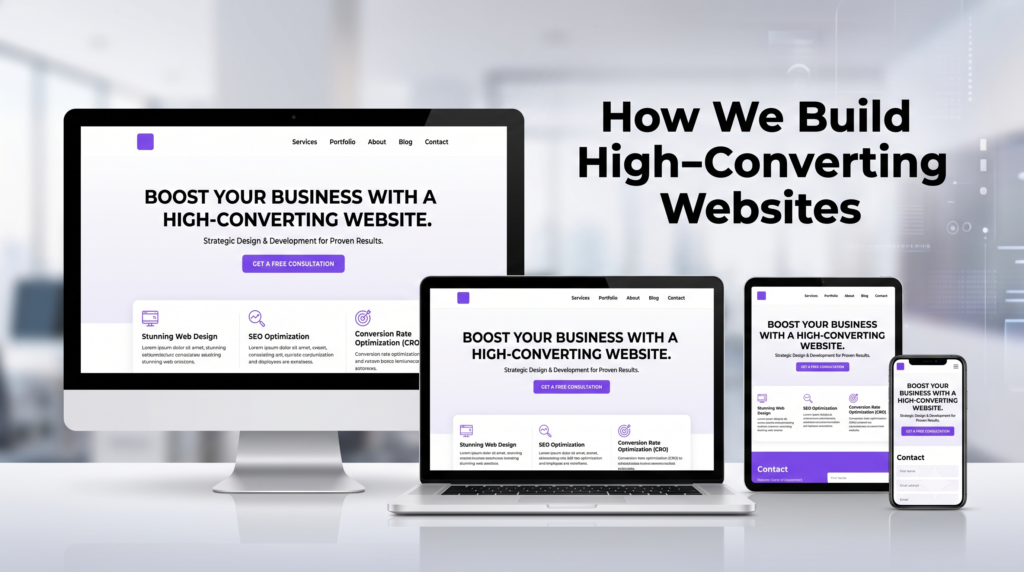
What Makes High-Converting Websites Effective?
A website that converts well is created with a business goal in mind. For each business, that goal might be getting enquiries, receiving phone calls, setting up appointments, selling items or getting requests for advice.
Some key parts are:
- Clear and meaningful messages
- Easy to navigate
- buttons that tell people what to do next
- Designs that work on phones
- Pages that load quickly
- Content that makes people trust the business
- Forms that are simple to fill out
- A design that looks the same all over
- A structure that works with search engines
The most important thing is how all these parts work as a team. A website might look nice. Still not doing well if people don’t get what is being offered or don’t know what to do next.
That is why our process starts with a plan of jumping straight into design.
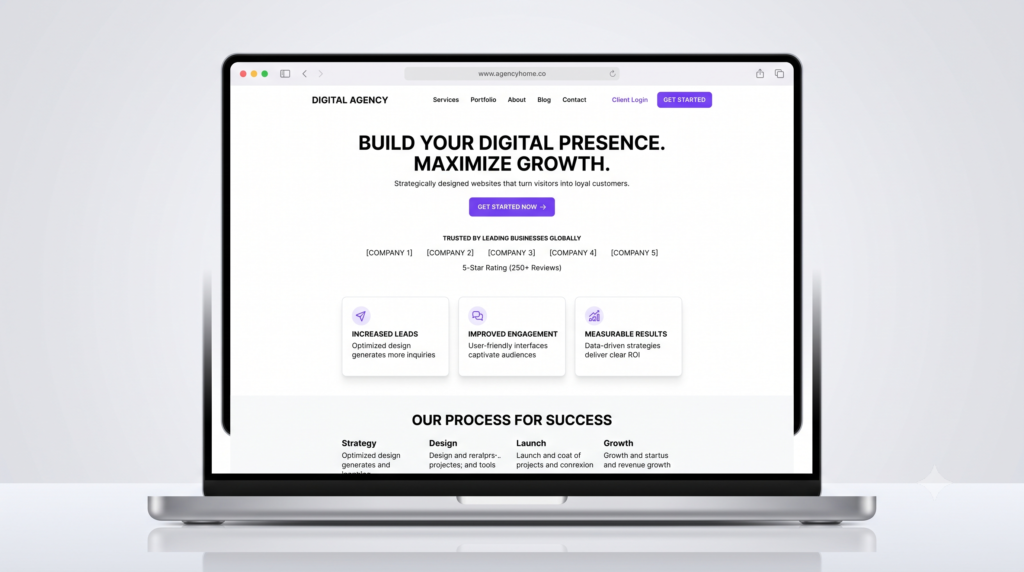
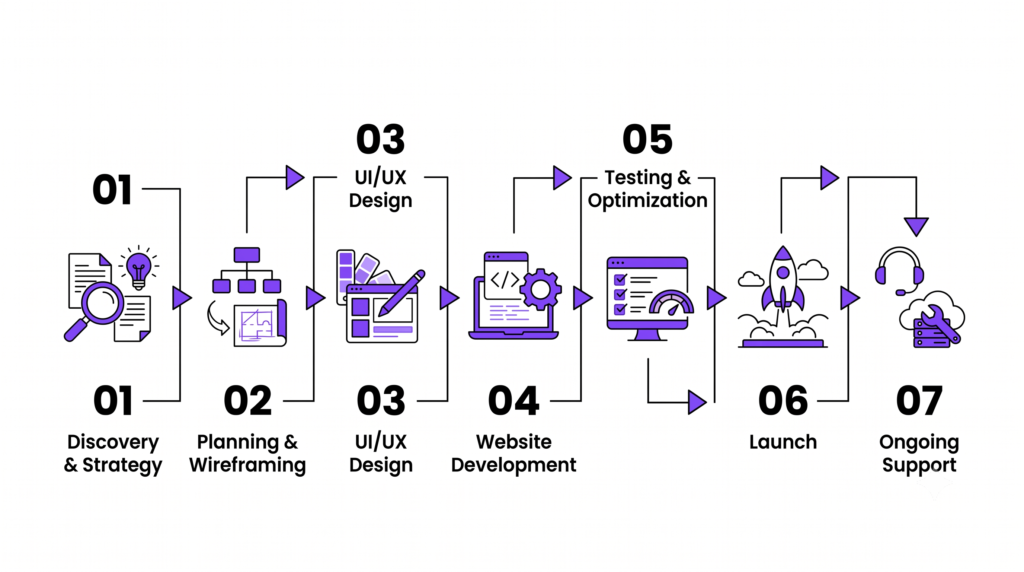
Our 7-Step Website Development Process
01 — Discovery & Strategy
Every project starts with understanding the business.
We identify:
- Business goals
- Target audience
- Products or services
- Customer needs
- Competitors
- Brand positioning
- Website requirements
- Desired actions
For example, if the business runs an e-commerce site, the business focus is on product discovery and purchases; if the business offers services, the business focus is on enquiries or consultation bookings.
This information gives the business direction for the rest of the project.
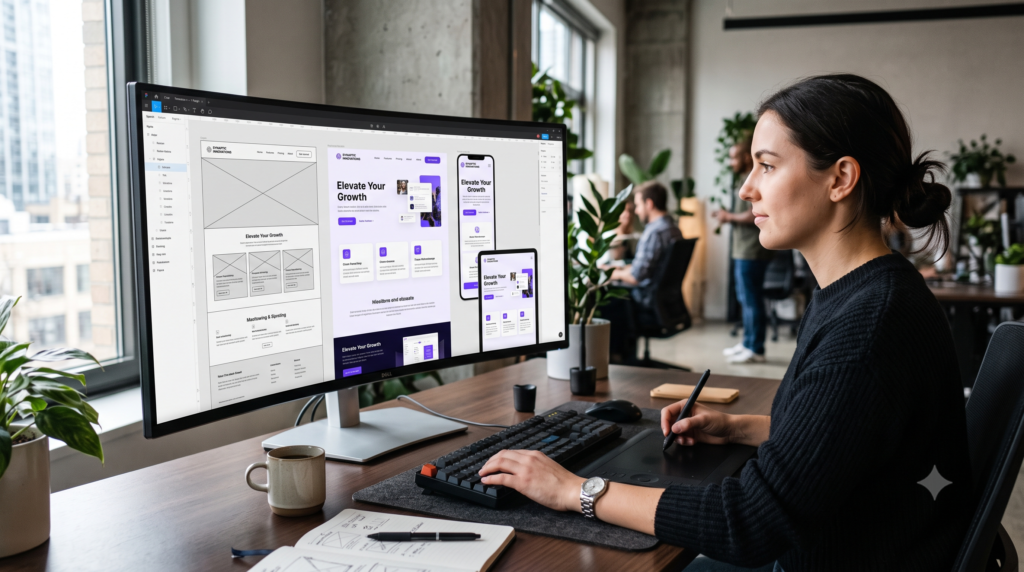
02 — Planning & Wireframing
Once the objectives are clear, we plan the website structure. We then decide which pages are needed, how the navigation will work, what information belongs on each page, where the calls‑to‑action should appear and how visitors will move through the website.
This includes deciding:
- Which pages are required?
- How the navigation will work
- What information belongs on each page
- Where calls-to-action should appear
- How visitors will move through the website
We then use wireframes to create a layout before moving into design. Wireframing helps organise content and page sections, making the design and development stages more efficient.
03 — UI/UX Design
With the plan in place, we start working on the user interface and user experience design.
User experience is about how people use the website, and user interface is about how the website looks.
We focus on:
Typography
- Colours
- Spacing
- Forms
- Buttons
- Images
- Navigation
- Page layouts
- hierarchy
The goal is to make sure important information is easy to read and important actions are easy to find.
For instance, a service page should clearly show what the service provides, who it is, for whom it is, and how someone can ask questions.
04 — Website Development
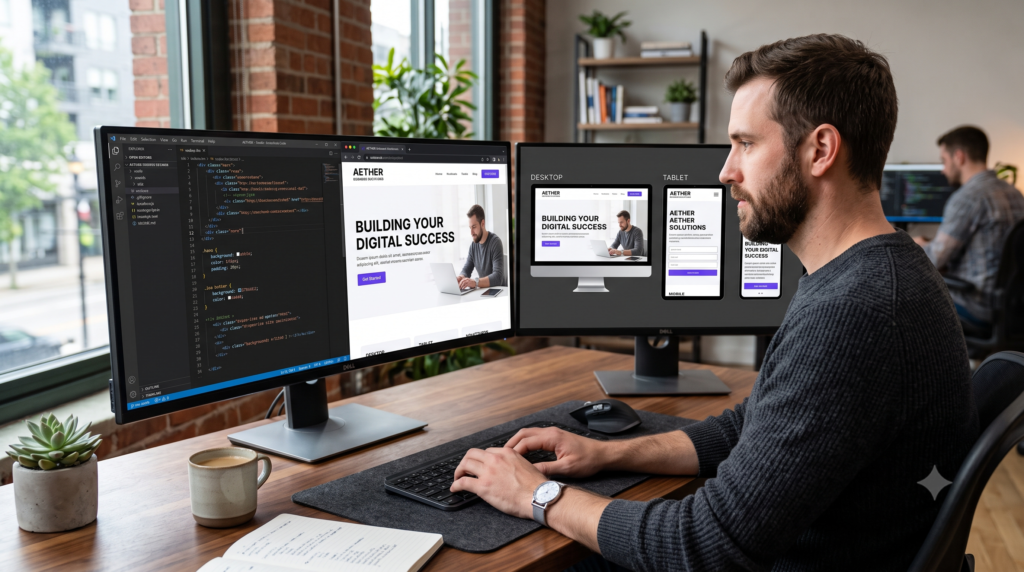
Once the design gets approved, we begin turning the design’s layouts into a functioning website.
We pick the tools that fit the project—WordPress, Elementor, HTML, CSS, JavaScript and other technologies that match the project. Google also recommends building websites that are secure, fast, accessible and usable across different devices
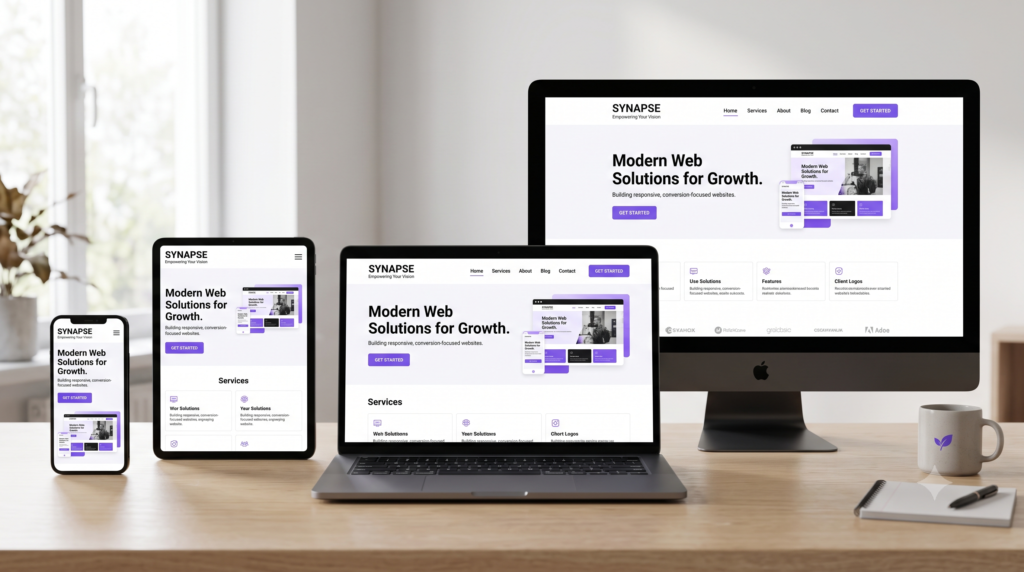
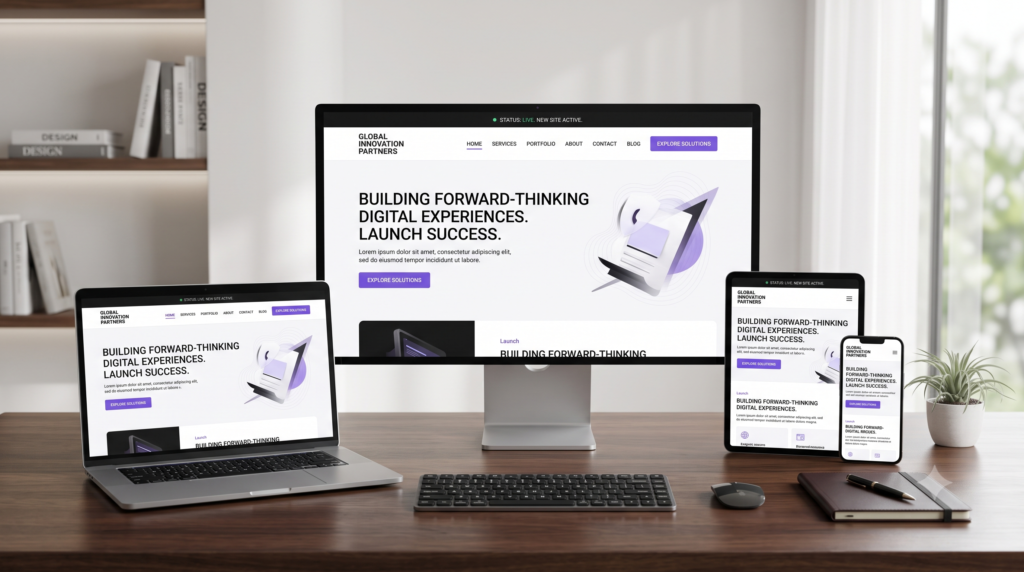
- Responsive layouts ensure the website looks good on every screen.
- Navigation that’s clear and easy to use keeps the website simple.
- Contact forms that actually work keep the website functional.
- Interactive elements keep visitors engaged with the website.
- A well‑organised page structure gives the website clarity.
- Compatibility across different web browsers keeps the website stable.
- Fast performance lets the website load pages quickly.
- Strong security protects the website and its users.
The goal is to make the website work perfectly on desktops, tablets and smartphones, not one device. We build the website with all screen sizes in mind from the beginning.
05 — Testing & Optimisation
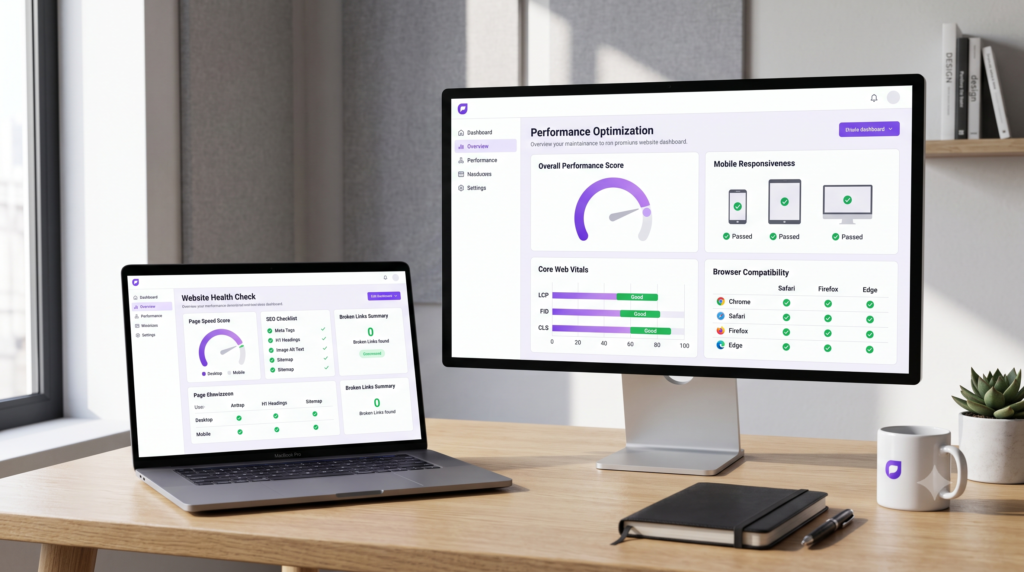
Before the website goes live, every important part of the site needs to be reviewed.
We check:
- Navigation
- Buttons
- Forms
- Links
- Images
- Mobile layouts
- Desktop layouts
- Page loading
- Browser compatibility
- Basic SEO elements
We also find problems such as large images, broken links, layout issues or parts that are hard to use.
This step makes sure the website is prepared for real people to visit or just appears complete in the development area.
06 — Launch
After testing and approval, the website is ready to be launched.
We check setup items such as:
- Domain connection
- Hosting configuration
- SSL HTTPS
- Forms and contact options
- Responsive layouts
- Essential website settings
- Basic search visibility setup
When all the final checks are done, the website can go live.
07 — Ongoing Support
Launching a website is not always the end of the work.
A company might need pages, updated information changes to the code security updates or better speed as its needs change.
If you need help with the project, the website could use the following services:
- Updating the content on the website
- Fixing problems on the website
- Keeping the website running
- Adding security updates to the website
- Changing the look of the website
- Making pages for the website
- Giving technical help for the website
- Improving speed and performance of the website
These steps keep the website working well and keep the website in line with the business as it grows.
Why Strategy Comes Before Design
A website can look impressive. Still fail to communicate what a business actually offers.
Before designing a page, we need answers to four basic questions:
What does the business offer?
Who is the target customer?
What problem does the business solve?
What should the visitor do next?
These answers influence the page structure, content, calls-to-action and overall user journey.
That is why design is treated as part of a strategy rather than as an isolated visual exercise.
The Role of Content
Design draws people in. Content tells them what is being offered.
Website content should help visitors understand the business without requiring them to wander through pages for basic information.
Depending on the project, important pages might be:
- Homepage
- About
- Services
- Product pages
- Landing pages
- Contact
- FAQ
- Blog
Good content should focus on the visitors’ needs, explain the value of the offer and provide information to help them take the next step.
For example, merely saying that a company provides website development, the page can explain what is included, who the service is for, and how the process works.
Mobile-Friendly Website Design
A modern website should run smoothly on every screen size.
While building a website, we check elements such as:
- Font sizes
- Buttons
- Navigation menus
- Images
- Forms
- Section spacing
- Page width
- Horizontal scrolling
The goal is to give a consistent experience for users who visit the modern website from a smartphone, a tablet or a desktop computer.
Website Speed and Performance
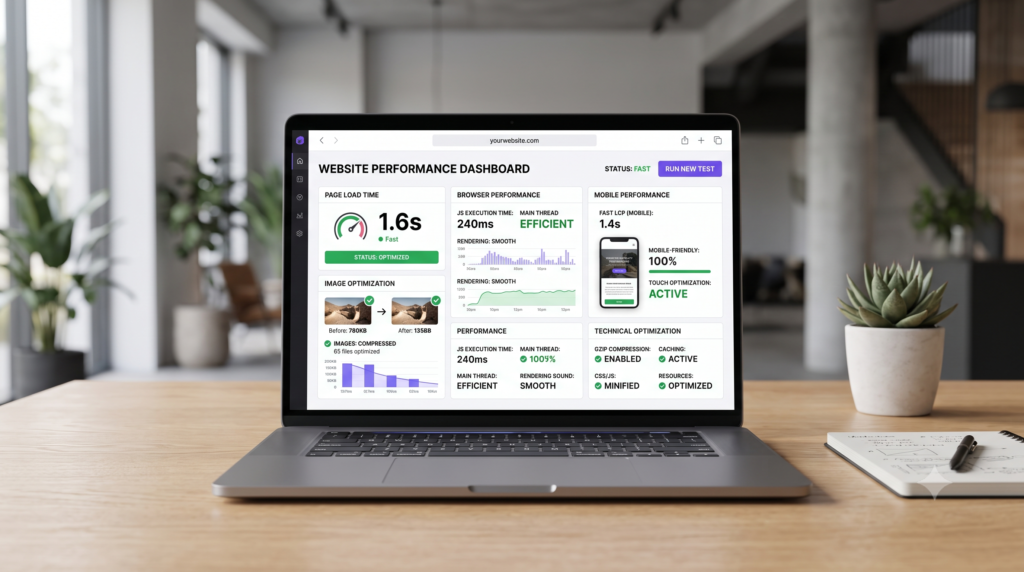
Page performance is another part of development.
Large images, scripts, too many files and poorly designed website elements can make a site load slowly.
Depending on the project, we check:
- Image sizes
- File sizes
- Scripts
- Caching
- Hosting performance
- Third-party resources
The goal is to create a website that loads quickly and works well without adding things that can make it slower. You can also learn more about web performance and page speed through Google’s web.dev Performance course.
SEO-Friendly Website Structure
SEO should be considered while building a website rather than being left until the very end.
A search‑friendly structure can include:
- Page titles
- Correct heading order
- Clean URLs
- Internal links
- mage alt text
- Valuable content
- Mobile‑friendly pages
- XML sitemap
- Easy‑to‑scan page layout
These items build a stronger technical and content base for future organic search results. For more information about search-friendly website practices, see Google Search Central’s SEO documentation.
What Makes Our Approach Different?
Every business has its customers, services, goals and needs.
By using a one-size-fits-all approach, we shape each project around the specific needs of the business.
Our process brings together:
- Business strategy
- Planning
- UI/UX design
- Website development
- Performance considerations
- Search‑friendly structure
- Testing
- Support
This creates a more organised workflow and gives the final website a clear purpose, beyond simply having an online presence.
Frequently Asked Questions
How long does it take to build a website?
The time it takes depends on the number of pages, the features needed, the content to include the design requirements and how complicated the development is. A simple business website usually takes less time than an e-commerce site or a custom-built website.
What is a converting website?
A converting website is created to help visitors understand what is being offered and take the action they are meant to take, like reaching out to a business, booking a service or buying a product.
Why is UI/UX design important?
UI/UX design makes a website easier to use and move around on while keeping the look and feel the same throughout the site.
Should a website be mobile-friendly?
Yes. A website needs to work on smartphones, tablets, laptops and desktop computers.
Can a website be improved after it is launched?
Yes. The content of how fast it works, the look of the technical parts and the features can all be improved as the business grows and changes.
Do you provide website support?
Ongoing support might include updating the website, fixing problems, helping with issues, changing the content, fixing errors and making the website run better depending on the project.
Conclusion
Building websites that convert well needs more than a modern look.
Our seven‑step process takes a website from discovery to launch and ongoing support:
- Strategy
- Planning & Wireframing
- UI/UX Design
- Website Development
- Testing & Optimisation
- Launch
- Ongoing Support
Each stage plays a role in making a website that is easy to use, works well and matches the business goal.
A well‑planned website gives a business a digital base and helps visitors understand the offer and move forward.